- Average gas price (nominal): $1.11
- Inflation-adjusted (2025–26 dollars): $3.21
At first glance, the early 1990s look like the golden age of cheap gasoline. During the presidency of George H. W. Bush, the average price of gas was $1.11 per gallon. But once you adjust that figure for inflation, it becomes $3.21 in today's dollars. Several global events shaped gas prices during this time. The most notable was the 1990 Gulf War, when Iraq invaded Kuwait, disrupting oil supplies and creating volatility in global crude markets.
Oil prices briefly spiked as markets feared a prolonged supply crisis. The U.S. economy entered a recession in the early 1990s, which reduced demand for fuel and helped stabilize prices overall. Another factor was OPEC’s role in managing oil production. Supply coordination among major producers often kept prices from falling too far.

- Average gas price (nominal): $1.15
- Inflation-adjusted (2025–26 dollars): $3.19
The mid-1990s were characterized by strong economic growth in the United States. As the economy expanded, so did demand for gasoline, particularly as suburban development and commuting increased. However, global oil production kept pace with demand, preventing dramatic price spikes. Another reason prices remained moderate was the absence of major geopolitical disruptions affecting oil supply.
Compared with later decades, the oil market was relatively calm. Technological advances in drilling were beginning to emerge, but the massive boom in U.S. shale production was still years away. Because inflation was gradually rising throughout the decade, the nominal price of gasoline looks extremely low by modern standards.
- Average gas price (nominal): $1.24
- Inflation-adjusted (2025–26 dollars): $3.26
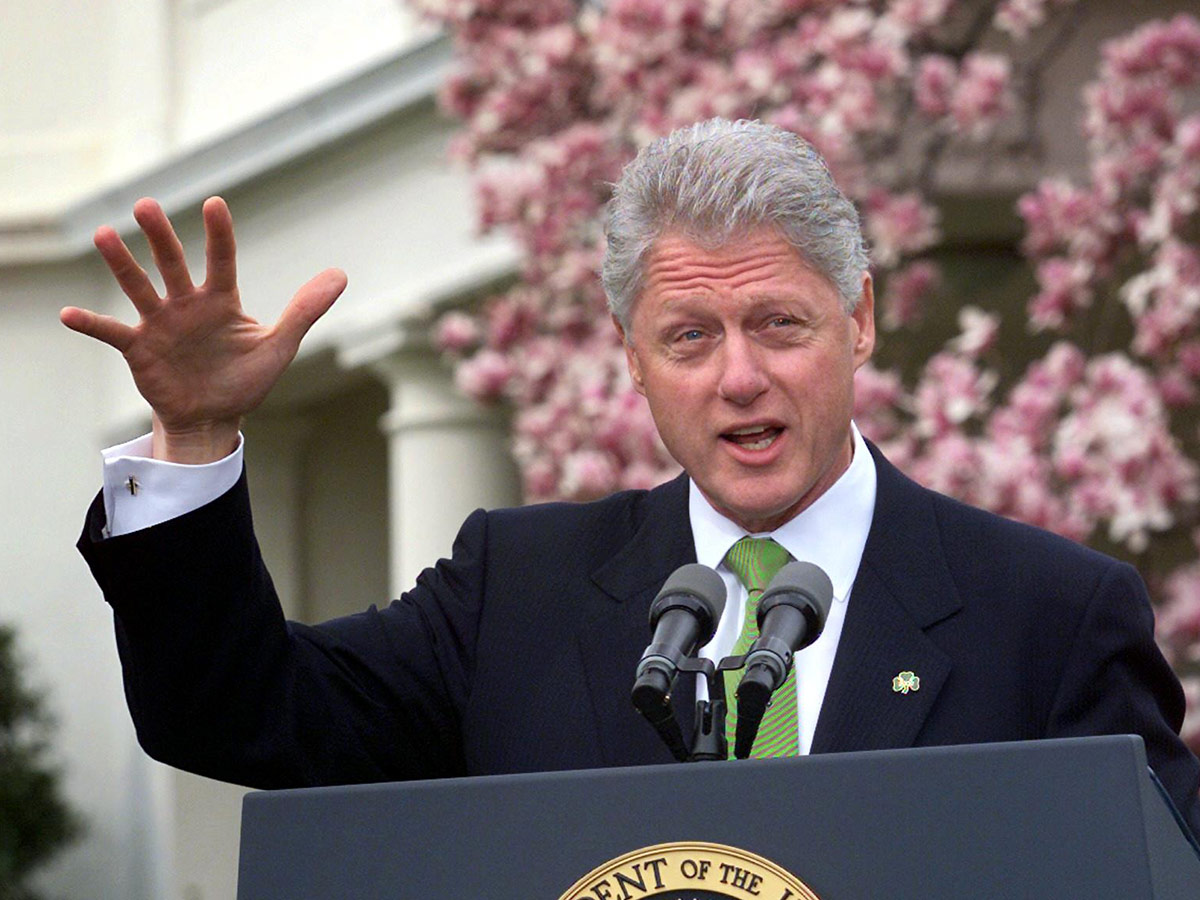
Gas prices rose modestly during Clinton’s second term, reaching an average of $1.24 per gallon, which equals $3.26 in inflation-adjusted dollars. One major factor was the Asian financial crisis of the late 1990s, which initially caused oil demand to drop sharply. That pushed crude prices downward for a short period. In response, major oil-producing countries, particularly those in OPEC, reduced production to stabilize the market. When global economic growth resumed, those production cuts helped push prices back up.
Meanwhile, the United States experienced strong economic expansion and increased vehicle usage. The late ’90s tech boom fueled economic optimism, and Americans drove more as both population and economic activity grew. Even though drivers paid only $1.24 per gallon on average, the inflation-adjusted number of $3.26 shows that the purchasing power comparison with modern prices isn’t dramatically different. It’s another reminder that inflation changes how we remember the cost of everyday goods like gasoline.

- Average gas price (nominal): $1.57
- Inflation-adjusted (2025–26 dollars): $3.28
During the first term of George W. Bush, the average gas price climbed to $1.57 per gallon, or $3.28 in inflation-adjusted dollars. This period marked the beginning of a long upward trend that would define the 2000s energy market. The early 2000s were shaped by several major geopolitical and economic events. The September 11 attacks in 2001 temporarily reduced travel demand, but the subsequent economic recovery and global growth quickly pushed oil consumption higher.
At the same time, emerging economies, especially China, began dramatically increasing their demand for energy. Military conflicts in the Middle East also created uncertainty in oil markets. Global supply wasn’t permanently disrupted, but geopolitical tension often pushes crude prices higher due to fears about potential shortages. Domestic oil production in the United States was relatively flat during this period, meaning the country relied heavily on imports.

- Average gas price (nominal): $2.74
- Inflation-adjusted (2025–26 dollars): $3.29
This was one of the most volatile periods for gasoline prices in recent history. Several factors collided during these years. Global demand for oil surged as rapidly developing economies expanded. Geopolitical tensions in oil-producing regions created persistent uncertainty in supply chains. Another major influence was the series of hurricanes that hit the Gulf Coast in 2005, including Hurricane Katrina and Hurricane Rita.
These storms disrupted refining capacity and offshore drilling operations, temporarily reducing the supply of gasoline and pushing prices higher. The period also ended with the 2008 global financial crisis, which caused oil prices to crash after peaking earlier that year. Despite that sharp drop late in the term, the overall average still came in at $2.74, reflecting several years of historically high prices before the recession hit.

- Average gas price (nominal): $3.08
- Inflation-adjusted (2025–26 dollars): $3.26
This period began in the shadow of the Great Recession, when oil prices had collapsed due to reduced demand. As the global economy recovered, energy consumption rebounded quickly, pushing oil prices higher again. One of the most significant developments during this time was the rapid growth of U.S. shale oil production.
Advances in hydraulic fracturing and horizontal drilling unlocked large reserves of domestic oil, particularly in states like North Dakota and Texas. The shale boom eventually helped increase global supply, but its full impact took several years to materialize. Around this time, political instability in parts of the Middle East created additional uncertainty in oil markets. That combination of rising demand and geopolitical risk kept prices relatively elevated throughout the term.

- Average gas price (nominal): $2.87
- Inflation-adjusted (2025–26 dollars): $3.23
A key reason for this shift was the continued expansion of U.S. oil production. The shale revolution dramatically increased domestic output, turning the United States into one of the world’s leading oil producers. This surge in supply helped ease pressure on global markets. In 2014, another major shift occurred when OPEC decided not to cut production despite falling oil prices.
The strategy was partly aimed at maintaining market share against rapidly growing U.S. shale producers. The result was a sharp drop in global crude prices, which filtered down to cheaper gasoline for drivers. Although prices fluctuated significantly throughout the term, the overall average landed at $2.87, reflecting both the early years of higher prices and the later collapse in oil markets.

- Average gas price (nominal): $2.49
- Inflation-adjusted (2025–26 dollars): $3.17
The late 2010s saw strong oil production not just in the United States but around the world. American shale output continued to grow rapidly, helping create an abundant global supply. This increase helped keep prices relatively stable despite strong economic growth and high fuel demand. The biggest event affecting gas prices during this period came in 2020 with the COVID-19 pandemic.
As travel halted and economic activity slowed dramatically, global oil demand collapsed almost overnight. In some markets, crude oil prices even briefly turned negative due to oversupply. Although the pandemic caused unusually low prices toward the end of the term, the overall average still landed at $2.49. In inflation-adjusted terms, $3.17 shows that even during a historically unusual period, gasoline prices remained within a fairly consistent long-term range.

- Average gas price (nominal): $3.56
- Inflation-adjusted (2025–26 dollars): $3.40
The early part of this period was defined by the global economic recovery from the COVID-19 pandemic. As travel resumed and industries restarted, demand for oil surged faster than supply could keep up. That imbalance pushed prices higher across the world. Another major driver was the 2022 Russian invasion of Ukraine, which disrupted global energy markets.
Russia is one of the world’s largest oil exporters, and sanctions as well as supply uncertainty contributed to higher crude prices globally. Inflation across the broader economy also played a role, raising the cost of refining, transportation, and distribution.

Average gas price today: $3.71
Because this term is still unfolding in 2026, this figure represents a volatile snapshot rather than a settled four-year average. The administration began with a heavy "Drill, Baby, Drill" focus to lower costs, but the primary driver of recent price action hasn't been domestic policy, but the erupting Iran War. This conflict has sent shockwaves through the Strait of Hormuz, a critical chokepoint for global oil, creating a geopolitical risk premium that offsets the gains from record U.S. shale production.
The oil market today is a tug-of-war between high domestic supply and extreme regional instability. The U.S. is producing more crude than ever, but the threat of a wider Middle Eastern escalation keeps prices from dipping into the "cheap" territory seen in previous decades. The war has disrupted global energy investment and insurance rates for tankers, adding hidden costs to every gallon.