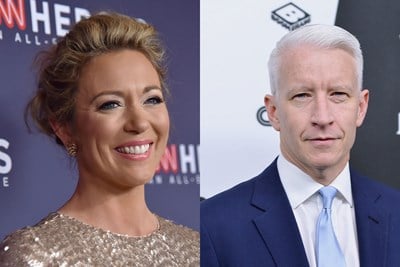
On January 29, independent journalist and former CNN anchor Don Lemon was taken into federal custody in Los Angeles by a large contingent of agents from the FBI and Department of Homeland Security. Shortly afterward, Minnesota-based independent journalist Georgia Fort was also arrested in connection with coverage of an anti-ICE protest at a church in St. Paul, Minnesota, where a senior ICE official also serves as pastor. Both were indicted by a federal grand jury days earlier.
Attorney General Pam Bondi announced the arrests, saying the defendants had participated in a “coordinated attack” on the church. Prosecutors charged Lemon and Fort under two federal statutes: a Reconstruction-era anti-civil-rights crime — conspiracy to deprive rights — and the Freedom of Access to Clinic Entrances (FACE) Act, which prohibits interference with another’s ability to exercise religious worship or access reproductive-health facilities.
The Department of Justice’s indictment asserts Lemon and others unlawfully “oppressed, threatened, or intimidated” worshippers by remaining inside the church with protesters. Lemon’s attorneys maintain his presence was strictly journalistic — documenting, interviewing, and reporting — and protected by the First Amendment.
Critics of the arrests, from the Knight First Amendment Institute to international press-freedom advocacy groups, have called the move “extremely alarming” and “another attack” on press freedom, particularly since multiple federal judges initially refused to approve arrest warrants due to lack of probable cause.
Journalist Ronan Farrow highlighted procedural irregularities, noting a magistrate judge had rejected probable cause, and the government pursued an indictment anyway. He warned that criminalizing the observation of dissent through technical legal overreach resembles tactics seen in authoritarian regimes.
What Is the FACE Act?
The Freedom of Access to Clinic Entrances (FACE) Act, codified at 18 U.S.C. § 248, was passed in 1994 to protect individuals seeking reproductive-health services and houses of worship from obstruction, intimidation, or force. Prosecutors here applied the law to allegations that Lemon and others interfered with worshippers’ rights by their presence and conduct during the protest in a church — a use that legal scholars say is highly unusual and controversial when applied to journalists covering a story.
Traditionally, FACE has been invoked against individuals who physically block clinic entrances or use violence or threats to prevent access. Its application to journalistic coverage of a protest — even one that entered a private space — raises questions about how broadly federal authorities can define “interference” in ways that could intimidate newsgathering.
Why This Moment Is Unprecedented
Never in modern U.S. history has a major journalist been arrested by federal authorities for covering a protest. That Lemon and Fort, both Black journalists, are central to the case adds another layer of concern in a nation still grappling with systemic inequality and civil-rights legacies.
Observers have noted that the charges under a civil-rights statute enacted to confront post–Civil War terror groups — combined with the atypical application of the FACE Act — represent an extraordinary expansion of prosecutorial reach into the realm of journalism.
The optics of federal agents executing a dramatic arrest of journalists while parallel controversies swirl: the incomplete Epstein files release, lawsuits against federal agencies by the president, and broader disputes over immigration policy and protest policing, all point to deep fractures within American governance and constitutional norms.
Critics warn that if journalists can be charged with federal crimes for covering protests, the very function of a free press — to observe, document, and hold power to account — is imperiled.
Supporters of the arrests argue prosecutors are simply applying the law to alleged conduct that crossed lawful boundaries. But the broader implications (legal precedent, chilling effect on reporting, and the erosion of public trust) are already reverberating through media, legal, and civic institutions.
Smokeshows and Federal Distrust
This legal drama unfolds amid other high-profile federal controversies.
On January 30, the Justice Department released millions of pages of files related to the Jeffrey Epstein case under the Epstein Files Transparency Act, a law passed in November 2025 requiring DOJ disclosures to the public. The tranche included more than 3 million documents, videos, and images, but raised alarms because some victims’ names were improperly exposed before DOJ took them down, drawing bipartisan criticism.
Despite the massive release, Deputy Attorney General Todd Blanche stressed that the review complied with statute and contained no evidence of criminal wrongdoing by President Trump — a point some analysts see as politicized or incomplete, considering his name is mentioned thousands of times.
At the same time, President Trump and his eldest sons filed a $10 billion lawsuit against the Internal Revenue Service and U.S. Treasury Department over the unauthorized 2019–2020 disclosure of his tax returns — a historic legal action in which a sitting president is suing agencies he oversees (and funds that directly pull from taxpayer dollars, I might add). The lawsuit alleges reputational and financial harm from the leaks, a claim that has drawn widespread scrutiny, bipartisan criticism, and questions about executive overreach and accountability.
These simultaneous controversies over transparency, privacy, and governmental authority call into question the intent behind an overwhelming news cycle. Is one news story meant to cover up for another—or, perhaps, overwhelm to the point of an apathetic public?
What This Means for Democracy
The First Amendment’s protections of free speech and a free press are foundational to U.S. democracy. An arrest like Lemon’s, especially when federal judges previously rejected probable-cause findings, invites scrutiny about whether the justice system is being stretched to curb dissent or accountability journalism.
In a polarized political climate where trust in institutions is low, actions perceived as punitive against journalists can fuel skepticism about impartial justice, encourage reciprocal attacks on media by political actors, and deepen civic divisions.
If the Lemon case becomes a precedent for charging journalists in future protests or politically charged events, it could reshape the landscape of press freedom, embolden aggressive prosecution of unpopular speech, and threaten reporting on critical public-interest issues.
How courts, lawmakers, and the public respond to this moment will speak volumes about the resilience — or fragility — of democratic norms in the United States.