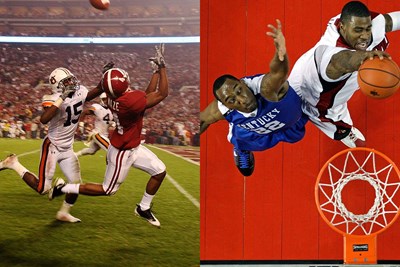
College athletics has spent the last few years in a state of upheaval. Name, image, and likeness (NIL) compensation arrived almost overnight, the transfer portal turned rosters into revolving doors, and conference realignment scrambled decades-old rivalries. Into that chaos steps a new piece of federal legislation: the Protect College Sports Act (PCSA) of 2026.
Introduced by Senate Commerce Committee Chairman Ted Cruz (R-Texas) and Ranking Member Maria Cantwell (D-Washington), along with Senators Eric Schmitt (R-Mo.) and Chris Coons (D-Del.), the bill arrived after a rival proposal, the SCORE Act, collapsed in the House. The PCSA is bipartisan, overwhelmingly passed the Senate on September 28, 2026, in a 77–22 vote, and drew a public nudge from President Trump. But as it heads to the House, it has also triggered pushback from an unusual coalition: labor unions, athlete-advocacy groups, and even some of the very universities it's meant to help.
What the Bill Actually Does
At its core, the PCSA tries to build a single national framework for college sports, replacing the current patchwork of state NIL laws, court rulings, and NCAA policy. Its major provisions include:
- NIL and antitrust protection. The bill would set federal rules for NIL compensation and grant the NCAA and conferences a targeted antitrust exemption to enforce them, while preempting conflicting state laws.
- Transfers and eligibility. Athletes would get one penalty-free transfer, and the sport would shift to a five-year eligibility window that generally excludes former professional athletes.
- Compensation caps. The legislation includes a hard cap on revenue-sharing payments from schools to athletes, along with an option for conferences to pool media rights.
- Media rights. Schools and conferences would gain limited antitrust cover to negotiate broadcast rights collectively, with restrictions on certain conference consolidations.
- Athlete protections. New rules would govern athlete agents, require NIL disclosure, preserve academic and scholarship standards, set health and safety requirements, and create a new medical fund for injured athletes.
- Women's and Olympic sports. Major athletic programs would be barred from cutting women's or Olympic sports teams — a provision that earned the bill an endorsement from the U.S. Olympic and Paralympic Committee.
- Silence on employment status. Unlike the SCORE Act, which explicitly declared athletes non-employees, the PCSA stays largely neutral on the question — leaving open the possibility that athletes could eventually be classified as employees or gain collective-bargaining rights.
Where the Bill Stands
After clearing the Senate Commerce Committee earlier in the summer, the PCSA passed the full Senate floor in a 77–22 vote on September 28, 2026. While the legislation won strong backing from NCAA President Charlie Baker and President Trump, floor debate and competing amendment filings pushed the final vote past the August recess and into late September. With the House out until after the November midterms, the bill's window for passage rests on the post-election lame-duck session. If the House does not pass the legislation before the 119th Congress adjourns in early January 2027, the bill dies and supporters will have to restart the entire legislative process from scratch in the next Congress.
The Case For: What Supporters Say
Backers frame the PCSA as a rescue mission for a system in crisis. Cruz has described it as legislation meant to protect athletes and competition, help coaches build sustainable programs, and preserve regional rivalries, while affirming athletes' NIL rights without letting college sports turn into a minor league for the NFL or NBA.
Beyond the rhetoric, supporters point to concrete benefits:
- Ending fragmentation. A single federal standard would replace the current mix of state NIL laws and NCAA rules that schools and athletes alike have described as unworkable.
- Competitive balance. Proponents argue caps and transfer restrictions would let programs outside the traditional powerhouses stay competitive.
- Protecting non-revenue sports. The women's and Olympic sports provision addresses fears that some schools would cut those programs to afford revenue-sharing payments to football and basketball players.
- New athlete safeguards. The medical fund, agent regulation, and disclosure requirements are pitched as overdue protections for athletes navigating a largely unregulated NIL marketplace.
- Broad institutional support. The bill has backing from the NCAA, numerous athletic directors and coaches — including former Alabama coach Nick Saban, who testified in a Senate hearing — and a formal statement of support from the White House.
The Case Against: What Critics Say
Opposition to the bill cuts across ideological lines, but the core objection is consistent: critics argue the PCSA hands the NCAA legal cover to keep controlling athletes' economic lives without giving those athletes a seat at the table.
The AFL-CIO and its Sports Council, representing professional athletes across ten major sports unions, came out against the bill. They argue it would let the NCAA set the terms of athletes' work across member schools while being shielded from antitrust liability, with no requirement that those terms be collectively bargained. The unions frame this as similar to the kind of employer collusion that would normally trigger legal scrutiny in any other industry.
The National College Players Association (NCPA) has been more pointed still, calling the bill a "Trojan horse" that uses transfer and eligibility concerns as cover to deliver the NCAA long-sought legal immunity. NCPA Executive Director Ramogi Huma argues the bill would gut the free-market NIL system athletes have built, potentially cutting off billions of dollars a year in NIL collective payments that flow disproportionately to Black football and basketball players, while money continues flowing to coaches and administrators who are predominantly white.
Other objections include:
- Institutional discomfort. The governing boards of Texas A&M and the University of Texas sent a joint letter opposing the bill in its current form, though they didn't publicly specify which provisions concerned them.
- Progressive holdouts in the Senate. Democratic Senators Chris Murphy and Cory Booker have worked to build opposition to the bill, with Murphy favoring a more athlete-friendly approach that would grant employment status and collective-bargaining rights outright.
- Unresolved employment question. Even some supporters acknowledge the bill's silence on employee status is a deliberate compromise — one that satisfies neither side fully and leaves the door open to future legal fights.
The Core Tension
Nearly every disagreement over the PCSA traces back to one question: should college athletes be treated as amateurs receiving new protections, or as workers who deserve a formal voice in setting the rules that govern their compensation? The bill tries to split the difference—granting the NCAA antitrust protection and national uniformity while avoiding a definitive statement on employment status. That ambiguity is precisely what's drawing fire from both directions: labor advocates say it hands the NCAA power without accountability, while some athletic departments worry the bill doesn't go far enough to settle the underlying legal uncertainty.
What to Watch Next
With the bill through the Senate, its future hinges on several remaining hurdles:
- Can the House find floor time to pass it during the brief post-election lame-duck session?
- Will House leadership accept the Senate's text intact without sending it to a drawn-out conference committee?
- How will athlete-advocacy groups and labor coalitions respond if it approaches the finish line?
For now, the Protect College Sports Act stands as a rare bipartisan effort in a polarized Congress—but with time running out for the 119th Congress, its final path into law remains far from guaranteed.