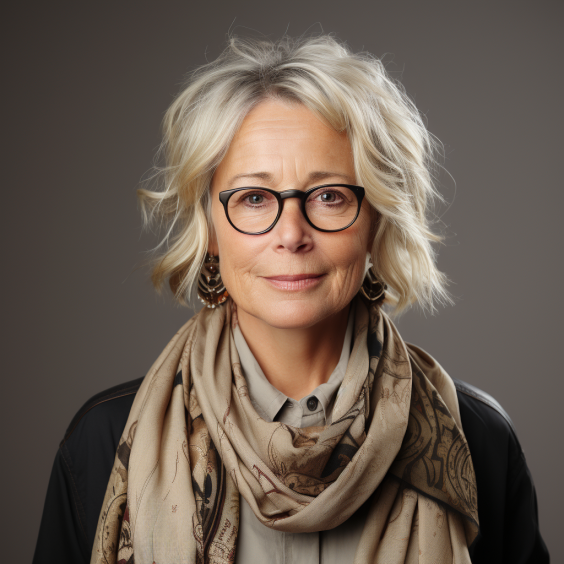
On January 3, 2026, Venezuela's President Nicolás Maduro was captured by U.S. forces and flown to New York to face drug trafficking charges. As the world collectively picked its jaw up off the floor, a new leader stepped into the spotlight: Delcy Rodríguez. Formerly Maduro's vice president, she now finds herself in the unenviable position of steering a nation through extreme uncertainty while navigating a sudden, and rather complicated, new relationship with the Trump administration. It’s one thing to be next in line; it’s another to be handed a country grappling with sanctions, crumbling infrastructure, a divided society, and international scrutiny.
Rodríguez’s swift appointment by Venezuela’s high court, with a strong nudge from the military. Is Venezuela about to see more of the same policies that kept Maduro’s ship on stormy seas, or is Rodríguez’s ascent the start of a pivot—one where she tries hand-holding with Washington? Her initial public statements offered both a bite and a bouquet: one moment decrying U.S. “atrocity” and the next inviting cooperation (preferably on her terms). For anyone still catching up, here’s a primer on the socialist stalwart now leading one of the world’s most oil-rich and politically complicated nations.
A Revolutionary Legacy
Delcy Rodríguez didn’t just wander into politics. Her roots run deep in Venezuela’s revolutionary history, with a family tree branching directly into the turbulent leftist movements of the late 20th century. Her father, Jorge Antonio Rodríguez, wasn’t just a name in a history book; he was a formative figure in Venezuela’s socialist circles, co-founding the militant Socialist League. His activism—and controversial involvement in the kidnapping of an American businessman in the 1970s—unfortunately led to his death in police custody, a trauma that would shape both Delcy and her brother, Jorge Rodríguez. You could say dinner table conversations in the Rodríguez house had a bit more revolutionary zeal than most.
The siblings grew up in a country forever flirting with—and often spiraling into—political upheaval. Early on, Delcy embraced a cause that had cost her family dearly, seeing politics not just as a profession but a mission scripted by tragedy and conviction. Her brother Jorge has also been a fixture in Venezuelan power circles, serving as the current president of the National Assembly.
As for Delcy, a law degree from the Central University of Venezuela and studies abroad gave her a toolkit sharper than most. Her entry into government was inevitabile. She first caught the political limelight under Hugo Chávez—the charismatic, polarizing architect of the so-called Bolivarian Revolution. Chávez deployed his prodigies in various roles, and Delcy fit the bill perfectly: sharp, loyal, and fluent in the rhetorical judo that defines Venezuelan politics. She cycled through important posts, taking on the roles of vice-minister for European affairs, then Minister of Communication. Unlike some political types who treat cabinet reshuffles as a time to update their LinkedIn, Delcy thrived, gaining credibility (and notoriety) for defending the government on the world stage.
Her time as Foreign Minister (2014–2017) placed her square in the international spotlight. Rodríguez dueled with critics at the United Nations and other global forums, building a reputation as a steadfast advocate for Venezuela’s sovereignty—at least as defined by the socialist agenda. When the world questioned the fairness of Venezuelan elections or decried human rights abuses, Delcy was on the front line, parrying accusations and doubling down on her government’s legitimacy.
The ascent didn’t stop there. As president of Venezuela’s controversial Constituent National Assembly, Rodríguez found herself tasked with neutralizing opposition—both on the streets of Caracas and within the ornate halls of government. By 2018, Maduro had appointed her vice president, a signal of her status as his most trusted lieutenant. She later took on a portfolio that reads like a bureaucrat’s fever dream: oil, finance, the feared intelligence service.
Navigating a Political Minefield
Stepping into the presidency after your boss gets whisked away by U.S. forces isn’t in most onboarding handbooks. But here Delcy is, tasked not only with picking up the policy pieces but also holding her coalition together in a room where everyone’s side-eyeing the exit. The first order of business: project a sense of calm and control for the cameras, while firefighting behind the scenes. The military is watching—closely. Their endorsement brought her to this moment, and their loyalty is a daily negotiation.
Delcy Rodríguez’s balancing act extends well past Venezuela’s borders. Her reign began with a diplomatic spat worthy of a Netflix drama; she condemned the U.S. intervention and the “kidnapping” of her predecessor, but within days, her rhetoric softened—if only slightly. She’s invited the Trump administration to the table (virtual, in all likelihood), suggesting a willingness to cooperate “within the framework of international law.” For her critics, this diplomatic dance is fraught: is she buying time, or actually opening a window to cooperation with the West, especially in a world where oil and sanctions talk louder than rhetoric?
Washington isn’t exactly buying Rafael Nadal tickets just yet. President Trump’s tone has bounced from boastful (“We’ll run the country”) to threatening (“If she doesn’t do what’s right, she’ll pay a bigger price than Maduro”). U.S. officials made clear their preference for stability, with the consensus in intelligence circles that insiders like Rodríguez were best placed to prevent the country from sliding into chaos. Notably, the U.S. declined to back opposition leader María Corina Machado—even after her Nobel Peace Prize credentials—preferring continuity, however imperfect, over a potentially destabilizing regime change.
Meanwhile, Europe’s reaction is mixed. The European Union has previously sanctioned Rodríguez for human rights violations and for her role in repressing dissent. Don’t mistake this for a snub at the inauguration party: it’s a sign that, for all her international posturing, Delcy has hurdles to clear before the EU welcomes her into the reformer’s club.
Oil, Sanctions, and Surprises
If Delcy Rodríguez hoped for a honeymoon period, Venezuela’s economy had other ideas. Inflation—or rather, hyperinflation—remains a relentless hurricane, blowing holes through savings and paychecks faster than you can say “bolívar.” Oil is the lifeblood of the nation (and the source of no small amount of the drama), but U.S. and international sanctions have choked production, crippled exports, and left even the most creative bureaucrats out of options.
When Rodríguez took over economic portfolios under Maduro, her task was Sisyphean: keep the lights on and the oil flowing under the gaze of an increasingly impatient citizenry. To her credit, she managed to stabilize production somewhat in recent years, navigating the ever-tightening web of sanctions with a mix of defiance and, when possible, creative accounting. She’s often praised—in certain corners—for keeping Venezuela’s oil industry afloat, though critics argue that any recovery has been tepid at best and hasn’t translated to relief on the ground.
Now, the world is watching to see whether her calls for “shared development” with the U.S. and overtures to Western oil companies are a genuine olive branch or a desperate play for dollars. President Trump has made his own interests clear: he wants U.S. oil firms inside Venezuela—even floating the idea that Washington might reimburse them for rebuilding the country’s shattered energy infrastructure. If Delcy manages a detente that gets wells pumping and pays Venezuela’s bills, it would mark a turnaround not even scriptwriters would have dared to dream up.
But there’s a catch. Accepting help from Washington means facing backlash from within the ruling party and the broader region. Some argue cooperation is the only way forward; others see it as capitulation—a betrayal of the Bolivarian revolution’s anti-imperialist ethos. Rodríguez will need sharp political instincts, not to mention a thick skin, as she maneuvers between competing expectations.
The International Response
Rodríguez’s appointment has ricocheted around the globe. The United Nations held emergency sessions, and critiques rang out at the U.S.’s “surgical law enforcement operation.” Countries friendly to Maduro’s brand of socialism—think Russia, China, and Iran—quickly labeled the U.S. raid an assault on sovereignty and condemned the new status quo. China was particularly vocal, insisting that Washington “disregarded” Maduro’s status as head of state and warning against setting precedents for the rest of the world to follow.
Neighbors in Latin America have been—let’s say—unenthusiastic about a solution by military intervention. Colombia’s president called U.S. policy “expansionist,” comparing it to troubling episodes from 20th-century history. Meanwhile, the region’s complicated political map has forced even the opposition to play things carefully: opposition movements want new elections but are wary of direct U.S. control. In Buenos Aires, Manila, and elsewhere, crowds have even protested outside American embassies, some burning flags, some simply waving them—proving, if nothing else, that in global politics, symbolism is alive and well.
At home, the response has been passionate. Crowds have taken to the streets of Caracas, waving portraits of Maduro and backing Rodríguez, but also calling for the release of political prisoners and real democratic reform. The National Assembly under her brother Jorge’s leadership has promised stability, though critics point out that promises come cheap in a country where tomorrow is anyone’s guess.


