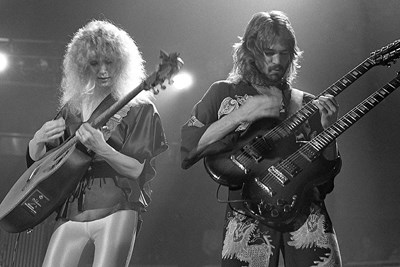
We often give glory to the soaring guitar solos or the powerhouse vocals, but the true heartbeat of any great track lives in the low end. The bass line bridges rhythm and melody, grounding the song while making your hips move.
We are diving deep into the groove to celebrate 20 of the most legendary bass lines in music history. These tracks prove that four strings can change the world.
"Another One Bites the Dust" – Queen
When you think of bass lines that compel you to move, John Deacon’s masterpiece on "Another One Bites the Dust" is likely the first to pop into your head. It is a masterclass in the power of space and minimalism. Instead of overcomplicating the arrangement with rapid-fire notes, Deacon leaned into a stark, dry funk groove that leaves plenty of room for the beat to breathe.
"Billie Jean" – Michael Jackson
If you want to understand the definition of a "pocket," listen to Louis Johnson’s work on "Billie Jean." This bass line is the engine of the song—a relentless, prowling eighth-note pulse that drives the track forward with nervous energy. It perfectly mirrors the lyrical content, capturing the paranoia and tension of the narrative while keeping the groove undeniably danceable. It rarely deviates or fills; it just marches on, creating a hypnotic foundation for Michael Jackson’s vocal hiccups and the lush synth layers.
"Come Together" – The Beatles
Paul McCartney is often hailed for his melodic approach to the bass, and "Come Together" is perhaps the finest example of his unique style. This isn't just a rhythm track; the bass line is effectively the lead instrument during the verses. McCartney uses a distinct slide technique, gliding down the neck to create a swampy, thick tone that sounds almost vocal in nature.
"Good Times" – Chic
Bernard Edwards was a titan of the disco era, and "Good Times" is his crowning achievement. This bass line is sophisticated, articulate, and dripping with funk. It doesn't just hold the bottom end; it dances around the beat with syncopated precision. The interplay between Edwards’ bass and Nile Rodgers’ scratching guitar is the secret sauce of the Chic sound—a locked-in groove that feels effortless yet technically complex. The cultural impact of this specific bass line cannot be overstated. It is widely considered the spark that ignited the hip-hop revolution, serving as the backing track for the Sugarhill Gang's "Rapper's Delight."
"Money" – Pink Floyd
Pink Floyd was never a band to follow the rules, and "Money" is a prime example of their experimental genius. Roger Waters’ bass riff is instantly memorable, not just for its catchy melody, but for its unusual time signature: 7/4. This odd meter gives the riff a looping, loping feel that sounds slightly off-kilter, perfectly matching the sound of clinking coins and cash registers that open the track.
"Under Pressure" – Queen & David Bowie
Simplicity is often the key to brilliance. The bass line for "Under Pressure," credited to John Deacon, consists of just two repeated notes and a rhythmic drop, yet it carries an immense amount of emotional weight. That "Ding-ding-ding-da-da-ding-ding" pattern is arguably one of the most famous musical phrases of the 20th century.
"Seven Nation Army" – The White Stripes
Here is the fascinating twist: the most famous "bass line" of the 2000s wasn't played on a bass guitar at all. Jack White recorded this thunderous riff using a semi-acoustic guitar run through an octave pedal to pitch it down. The result is a murky, aggressive sound that became an instant global anthem. The riff is primitive and stomping, recalling the raw power of early blues but delivered with garage-rock ferocity.
"Super Freak" – Rick James
Rick James dubbed his style "punk-funk," and "Super Freak" is the ultimate expression of that sound. The bass line is nasty, in the best possible way. It’s rigid, punchy, and incredibly infectious, blending the mechanical feel of new wave synthesizers with the grit of street funk. The riff dominates the mix, demanding your attention and practically forcing you to the dance floor.
"Roundabout" – Yes
For those who love technical wizardry, Chris Squire’s work on "Roundabout" is the gold standard. As a cornerstone of progressive rock, this track features a bass tone that is uniquely bright and "clanky." Squire achieved this by using a Rickenbacker bass and fresh roundwound strings, playing with a pick to get a sharp, aggressive attack that cut through the dense mix of keyboards and guitars. The bass line in "Roundabout" is a melody in itself—complex, fast-moving, and full of harmonic nuance. It doesn't just sit in the background; it drives the song’s momentum with a galloping rhythm that feels like a runaway train.
"My Generation" – The Who
Before 1965, the electric bass was almost exclusively a background support instrument. Then came John Entwistle. On "My Generation," Entwistle unleashed a series of bass solos that shattered the glass ceiling for rhythm sections everywhere. His tone was distorted, aggressive, and incredibly loud, challenging the guitars for sonic dominance. He played the instrument with the dexterity of a lead guitarist, using rapid-fire triplets that left listeners stunned.
"Higher Ground" – Red Hot Chili Peppers
When the Red Hot Chili Peppers covered Stevie Wonder's classic, they injected it with their signature high-octane funk-rock energy, and Flea's bass line is the explosive core of that transformation. This isn't just a rhythm part; it's a frantic, slapping, and popping masterpiece. Flea’s aggressive technique creates a percussive and melodic line that drives the song with unmatched intensity.
"I Want You Back" – The Jackson 5
Before the song even properly starts, Wilton Felder’s bass line for "I Want You Back" comes bounding in, full of life and infectious energy. It’s a beautifully constructed line that is both melodic and rhythmic, providing a joyful counterpoint to the piano and guitar. The bass doesn't just follow the chord changes; it dances around them, creating a sense of movement that makes it impossible not to smile. What makes this line so special is its pure, unadulterated pop perfection.
"Hysteria" – Muse
Chris Wolstenholme's bass line in "Hysteria" is a modern rock epic. It’s not just a riff; it’s the central nervous system of the entire track. From the very beginning, the distorted, driving eighth-note pattern creates a sense of relentless momentum and urgency. This is a complex, fast-paced line that requires incredible stamina and precision, running almost continuously throughout the song.
"Schism" – Tool
Tool is known for its mind-bending polyrhythms and complex arrangements, and Justin Chancellor’s bass work on "Schism" is a prime example of their unique genius. This is not a song for casual listening; it’s a mathematical puzzle set to music. The opening bass riff, played with a distinct flanger effect, weaves through shifting time signatures, creating a feeling of unease and tension. Chancellor treats the bass as a lead melodic instrument, often playing intricate lines that are completely independent of the guitar part.
"Sunshine of Your Love" – Cream
The riff that powers "Sunshine of Your Love" is one of the most recognizable in rock history, and it was created by bassist Jack Bruce. While Eric Clapton’s guitar doubles the line, it’s Bruce's deep, slightly distorted tone that gives the riff its weight and power. The line is a simple, blues-based melody, but its repetitive, hypnotic quality is what makes it so iconic.
"Stand by Me" – Ben E. King
Proof that a bass line doesn’t need to be complicated to be legendary, Mike Stoller's contribution to "Stand by Me" is a masterwork of elegant simplicity. The line is built around a classic '50s progression, but its warmth and perfectly placed notes provide the song's gentle, reassuring pulse. It's the first thing you hear, and it sets the entire emotional tone of the track. It’s a supportive, melodic part that perfectly complements Ben E. King’s heartfelt vocals without ever getting in the way.
"Orion" – Metallica
The late, great Cliff Burton was a true innovator, bringing a level of melodic and technical skill to the bass that was unheard of in metal. "Orion," an instrumental track from Master of Puppets, is his magnum opus. The song features multiple bass-led sections, including a dreamy, atmospheric interlude where Burton uses effects to create a haunting, guitar-like melody.
"Ain’t No Mountain High Enough" – Marvin Gaye & Tammi Terrell
James Jamerson was the unsung hero of Motown, and his work on "Ain’t No Mountain High Enough" is pure magic. While the strings and vocals soar, Jamerson’s bass line provides the song's soulful, bubbling energy. He rarely plays the same thing twice, constantly improvising and adding melodic fills that feel like a second vocal line.
"YYZ" – Rush
Geddy Lee is a force of nature, and the instrumental track "YYZ" is one of his most celebrated performances. The song’s title is the airport code for Toronto, and the opening riff is based on the morse code for Y-Y-Z played in a 5/4 time signature. From there, the track launches into a high-speed progressive rock tour de force.
"Walking on the Moon" – The Police
Sting’s bass lines are known for their clever use of space, and "Walking on the Moon" is a perfect example. Instead of filling every beat, he leaves huge gaps, letting the notes breathe and creating a feeling of weightlessness that perfectly matches the song's title and theme. The bass line primarily lands on the downbeat, creating a simple, three-note anchor for the reggae-infused rhythm. This minimalist approach is incredibly effective. It creates a wide-open sonic landscape where the drums and guitar can echo and float.