Ever wonder what U.S. presidents did before they were president? We picture them signing laws and giving speeches, but a surprising number of them wore a different kind of uniform first. Long before they commanded the country, they commanded troops on the battlefield. From dusty revolutionary forts to the jungles of Vietnam and the skies over Europe, these future leaders faced enemy fire, made life-or-death decisions, and learned lessons you just can't get anywhere else.
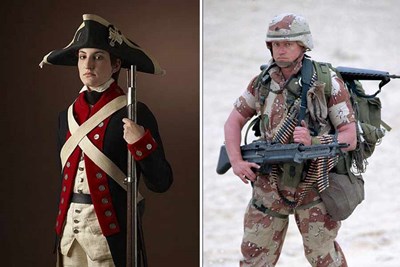
It turns out, military service has been a pretty common entry on the presidential resume. Thirty-one of the 45 presidents have served in some capacity. While some were career soldiers who rose to the highest echelons of power, others were citizen-soldiers who answered the call when their country needed them.
So, let's take a look at the presidents who weren't just Commander-in-Chief by title but had the military stripes to prove it. Who reached the highest ranks, and what did they do to earn them? You might be surprised by who was a true military legend.
George Washington: The One and Only General of the Armies
Highest Rank: General of the Armies of the United States
You can't start a list like this without the man himself, George Washington. He is, without a doubt, the most legendary military figure to ever become president. While his highest active-duty rank was General and Commander-in-Chief of the Continental Army, his story doesn't end there.
In 1976, for the nation's bicentennial, Congress decided that no American officer should ever outrank George Washington. They posthumously promoted him to the supreme rank of General of the Armies of the United States. It's a six-star equivalent rank that ensures he will forever be the top dog in U.S. military history.
Greatest Military Achievements:
Washington’s entire military career is an achievement, but his leadership during the American Revolution is the stuff of legends. He wasn't a tactical genius who won every battle—in fact, he lost more than he won. His real genius was in holding a ragtag, underfunded, and often starving army together through sheer force of will.
His most brilliant moment came during the brutal winter of 1776. The Continental Army was on the verge of collapse after a series of defeats. Morale was at an all-time low. On Christmas night, Washington led his men on a daring and treacherous crossing of the ice-choked Delaware River. They surprised and defeated a garrison of Hessian mercenaries at the Battle of Trenton. A few days later, he scored another victory at Princeton.
These two small victories were a massive shot in the arm for the American cause. They saved the revolution from fizzling out and proved that the Continental Army could stand and fight. Washington’s leadership, resilience, and strategic gamble at a moment of desperation cemented his status as a military icon and shaped his patient, steady leadership as the first President.
Ulysses S. Grant
Highest Rank: General of the Army of the United States
If Washington was the founding military father, Ulysses S. Grant was the man who saved the nation his predecessor helped create. Starting the Civil War as a retired officer working in his father's leather shop, Grant's rise was nothing short of meteoric. He ended the war as the first person since George Washington to be promoted to the rank of General of the Army, a four-star rank at the time.
Greatest Military Achievements:
Grant’s reputation was built on his relentless, aggressive style of warfare, a stark contrast to the overly cautious Union generals who came before him. His breakthrough came in the Western Theater, where he earned the nickname "Unconditional Surrender" Grant after capturing Fort Donelson in 1862.
But his masterpiece was the Vicksburg Campaign in 1863. The city of Vicksburg, Mississippi, was a Confederate fortress on the Mississippi River, considered impregnable. For months, Union forces had failed to take it. Grant, in a brilliant and risky campaign, marched his army deep into enemy territory, living off the land and cutting his own supply lines. After a series of lightning-fast battles, he besieged the city, which finally surrendered on July 4, 1863. The capture of Vicksburg split the Confederacy in two and was a major turning point in the war.
His performance earned him command of all Union armies. He then went east to face the legendary Robert E. Lee. While his Overland Campaign was a brutal, bloody meat grinder, Grant's grim determination to never retreat ultimately wore down Lee's army and led to the end of the Civil War. His tenacity and focus on total victory were hallmarks of his military career and his presidency.
Dwight D. "Ike" Eisenhower: Supreme Allied Commander
Highest Rank: General of the Army
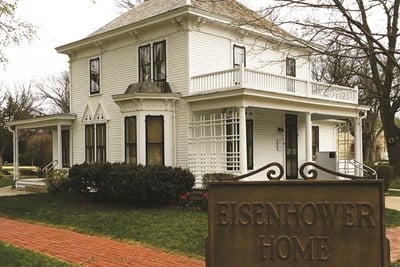
When you think of World War II generals, Dwight D. Eisenhower’s name is always at the top of the list. "Ike" was a master organizer and diplomat, skills that made him the perfect man to lead the largest and most complex military coalition in history. He was promoted to the five-star rank of General of the Army in December 1944.
Greatest Military Achievements:
Eisenhower’s entire career was impressive, but his crowning achievement was his role as the Supreme Allied Commander in Europe. His job wasn't just to move armies around a map; it was to manage the massive egos of Allied leaders like Winston Churchill, Charles de Gaulle, and his own prima-donna general, George S. Patton.
His most famous accomplishment, of course, was orchestrating Operation Overlord, the D-Day invasion of Normandy on June 6, 1944. This was the largest amphibious invasion in history, a colossal undertaking that involved coordinating millions of soldiers, sailors, and airmen from multiple countries. The success of D-Day opened the long-awaited second front in Europe and was the beginning of the end for Nazi Germany.
In the moments before the launch, with weather threatening the entire operation, Ike had to make the final gut-wrenching decision to go. He even penned a note taking full responsibility in case the invasion failed. That immense pressure and ability to make tough, decisive calls defined his military service and his two terms as President.
Zachary Taylor
Highest Rank: Major General
Zachary Taylor was a soldier's soldier. He spent forty years in the U.S. Army, fighting in multiple conflicts and earning a reputation as a tough, no-nonsense leader. His men affectionately called him "Old Rough and Ready" because he often wore a simple farmer's hat and casual clothes instead of a fancy officer's uniform, and he was known for sharing the hardships of his troops. He reached the rank of Major General.
Greatest Military Achievements:
Taylor became a national hero during the Mexican-American War (1846-1848). His greatest victory came at the Battle of Buena Vista in 1847. Taylor's army of about 5,000 volunteers was vastly outnumbered by a Mexican force of 15,000-20,000 troops led by General Santa Anna. Santa Anna demanded Taylor’s surrender, to which Taylor famously replied, "Tell him to go to hell."
Over the next two days, Taylor’s small, determined army repelled wave after wave of Mexican attacks. At a critical moment, when the American line was about to break, a young artillery captain named Braxton Bragg (later a Confederate general) and a colonel from Mississippi named Jefferson Davis (later the Confederate president) helped turn the tide. Taylor's calm leadership under extreme pressure secured a stunning victory against overwhelming odds. The win made him a household name and propelled him to the presidency in 1848.
Andrew Jackson
Highest Rank: Major General
Andrew Jackson, "Old Hickory," was one of the toughest and most controversial figures to ever occupy the White House. His military career was as fiery as his personality. He was a frontier lawyer and politician who became a military leader during the War of 1812, rising to the rank of Major General in the U.S. Army.
Greatest Military Achievements:
Jackson is forever remembered for his spectacular victory at the Battle of New Orleans in January 1815. The battle was technically fought after the peace treaty ending the War of 1812 had been signed, but news hadn't reached them yet. A powerful British force, composed of veterans who had defeated Napoleon, was set to capture the vital port city of New Orleans.
Jackson cobbled together a motley crew of defenders: regular army troops, Tennessee and Kentucky frontiersmen, local militia, free African Americans, and even a group of pirates led by Jean Lafitte. From behind fortified earthworks, Jackson’s outnumbered force unleashed devastating rifle and artillery fire on the advancing British regulars. The result was a stunningly one-sided victory. The British suffered over 2,000 casualties, including their commanding general, while Jackson lost only a handful of men. The victory made Andrew Jackson a national icon and fueled his populist rise to the presidency.
Theodore Roosevelt
Highest Rank: Colonel
Theodore Roosevelt was an adventurer, author, and politician who practically vibrated with energy. When the Spanish-American War broke out in 1898, Roosevelt was serving as the Assistant Secretary of the Navy. But he couldn't stand being on the sidelines. He resigned his post to form a volunteer cavalry regiment, officially the 1st U.S. Volunteer Cavalry, but better known to history as the "Rough Riders." He served as its Colonel.
Greatest Military Achievements:
The Rough Riders were a colorful mix of Ivy League athletes, cowboys, and lawmen. Roosevelt trained them in Texas before shipping out to Cuba. Their most famous exploit was the charge up Kettle Hill (often mistakenly called San Juan Hill) on July 1, 1898.
During the battle, Roosevelt, on horseback, grew impatient with the slow advance. He galloped between units, rallying the men and leading them in a daring charge up the hill under heavy Spanish fire. It was a chaotic, bloody, and incredibly brave assault that helped break the Spanish lines around Santiago. Roosevelt called it his "crowded hour."
The exploit made him a bona fide war hero and launched his political career into the stratosphere. He became Governor of New York, then Vice President, and finally President. For his heroism, he was posthumously awarded the Medal of Honor in 2001, making him the only president to receive the nation's highest military decoration.
Other Notable Soldier-Presidents
- Thomas Jefferson (Colonel, Virginia Militia): Served as colonel and commander of the Albemarle County Militia during the American Revolution. While he’s more famous as the principal author of the Declaration of Independence, his military role was defending Virginia against British incursions.
- James Madison (Colonel, Virginia Militia): Commanded local militia troops during the Revolutionary War, focusing on defense against the British in Virginia. His strategic leadership at the state level ensured vital resources and manpower made it to the Continental Army.
- James Monroe (Major, Continental Army): Served as an officer and was seriously wounded at the Battle of Trenton. Monroe displayed bravery on the front lines, and continued support for the Revolutionary cause strengthened his honor and reputation.
- Andrew Jackson (Major General, U.S. Army): Renowned for leading American forces to victory at the Battle of New Orleans during the War of 1812, catapulting him to national fame and earning him the nickname "Old Hickory."
- William Henry Harrison (Major General, Kentucky Militia): Led American forces in the Northwest Territory, winning the pivotal Battle of Tippecanoe and later defeating British and Native forces at the Battle of the Thames in the War of 1812.
- John Tyler (Captain, Virginia Militia): Served as a captain during local defensive actions in the War of 1812, primarily focusing on coastal defense of Virginia from British attacks.
- James K. Polk (Colonel, Tennessee Militia): Briefly served as a colonel, helping organize and prepare state militia units, though he did not see combat.
- Zachary Taylor (Major General, U.S. Army): Rose to fame during the Mexican-American War, most notably for victories at the Battles of Palo Alto, Resaca de la Palma, and Buena Vista, where his leadership against larger forces made him a national hero.
- Millard Fillmore (Major, Union Continentals): Commanded the Union Continentals, a militia home guard unit in Buffalo during the Civil War, responsible for local defense and support roles.
- Franklin Pierce (Brigadier General, New Hampshire Militia): Commanded a brigade during the Mexican-American War, participating in campaigns that captured Mexico City, though his service was marred by injury and illness.
- James Buchanan (Private, Pennsylvania Militia): Served briefly as a private during the War of 1812, defending Baltimore against British attack.
- Abraham Lincoln (Captain, Illinois Militia, 4th Illinois Mounted Volunteers): Led a company during the Black Hawk War, known more for his leadership and popularity among his men than for direct combat.
- Andrew Johnson (Brigadier General, U.S. Army Volunteers): Appointed military governor of Tennessee during the Civil War, where he kept the state loyal to the Union and maintained order during turbulent times.
- Ulysses S. Grant (General, U.S. Army): As commander of all Union armies, his leadership was decisive in ending the Civil War, forcing Confederate surrender at Appomattox.
- Rutherford B. Hayes (Brevet Major General, U.S. Army, 23rd Ohio Volunteers): Served with distinction in the Civil War; wounded multiple times, he was known for bravery at battles like South Mountain and Cedar Creek.
- James A. Garfield (Major General, U.S. Army Volunteers): Noted for his role in the Battle of Chickamauga, where his reconnaissance work provided crucial information for Union command.
- Chester A. Arthur (Brigadier General, New York Militia): Served on the staff of the governor of New York during the Civil War, managing logistics and supply for New York’s state troops.
- Benjamin Harrison (Brevet Brigadier General, U.S. Army, 70th Indiana Infantry Volunteers): Commanded troops in the Atlanta Campaign, known for his leadership at battles like Resaca and Peach Tree Creek during the Civil War.
- William McKinley (Brevet Major, U.S. Army): Distinguished himself under fire at the Battle of Antietam by resupplying the front lines, later rising to the rank of brevet major for his gallantry.
- Theodore Roosevelt (Colonel, U.S. Army Volunteers): Famous for leading the Rough Riders up Kettle Hill during the Spanish-American War and later awarded the Medal of Honor posthumously.
- Harry S. Truman (Colonel, U.S. Army Officer Reserve Corps): Commanded an artillery unit in World War I, noted for his leadership and ability to keep his men safe, then remained active in the reserves.
- Dwight D. Eisenhower (General of the Army, U.S. Army): Supreme Commander of Allied Forces in Europe during World War II; orchestrated D-Day and the liberation of Western Europe.
- John F. Kennedy (Lieutenant, U.S. Naval Reserve): Earned the Navy and Marine Corps Medal for leadership and courage after rescuing his PT-109 crew during World War II.
- Lyndon B. Johnson (Commander, U.S. Naval Reserve): Served in the Navy during World War II, received the Silver Star for a fact-finding mission in the South Pacific.
- Richard M. Nixon (Commander, U.S. Naval Reserve): Served in the Pacific as an operations officer in logistics, supporting the supply lines vital to Allied victories.
- Gerald R. Ford (Lieutenant Commander, U.S. Naval Reserve): Served on the USS Monterey, an aircraft carrier in the Pacific during World War II, and saw action in several major operations.
- Jimmy Carter (Lieutenant Commander, U.S. Navy): Served as a submariner, specializing in nuclear propulsion and serving in both the Atlantic and Pacific fleets.
- Ronald Reagan (Captain, U.S. Army): Served stateside during World War II, making training and propaganda films that supported both troops and the war effort.
- George H.W. Bush (Lieutenant Junior Grade, U.S. Navy): Flew 58 combat missions as a Navy pilot in World War II, earning the Distinguished Flying Cross after being shot down during a bombing raid.
- George W. Bush (First Lieutenant, Texas Air National Guard): Served as a pilot, flying F-102 fighter jets during the Vietnam era, although he was not deployed overseas.
These presidents' military experiences shaped their leadership styles, resilience, and commitment to service, leaving a lasting mark on both U.S. history and the legacy of the presidency itself.